A brief history of 609 (West Riding) Squadron Royal Auxiliary Air Force
“The White Rose Squadron”
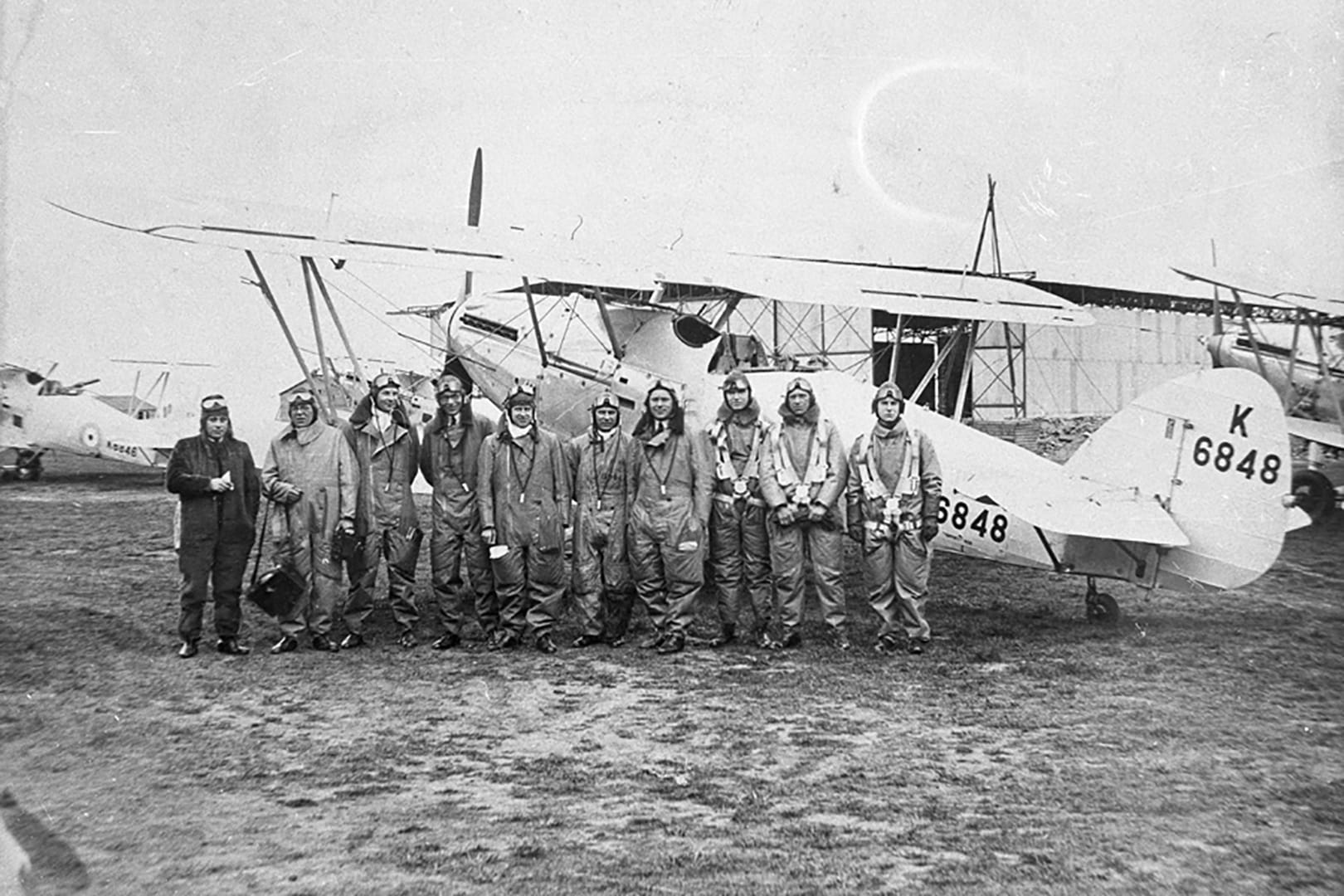
The early history of 609 Sqn is well known, having formed at RAF Yeadon north of Leeds on 10 February 1936 as a day bomber unit of the Auxiliary Air Force, the first OC being Sqn Ldr Harald Peake. In December 1938 it was redesignated a fighter unit and by September 1939, on the outbreak of war, 609 was flying the superb Supermarine Spitfire. Most pilots and groundcrews being reservists, also referred to as ‘Auxiliaries’, were recruited from Leeds and the surrounding area.
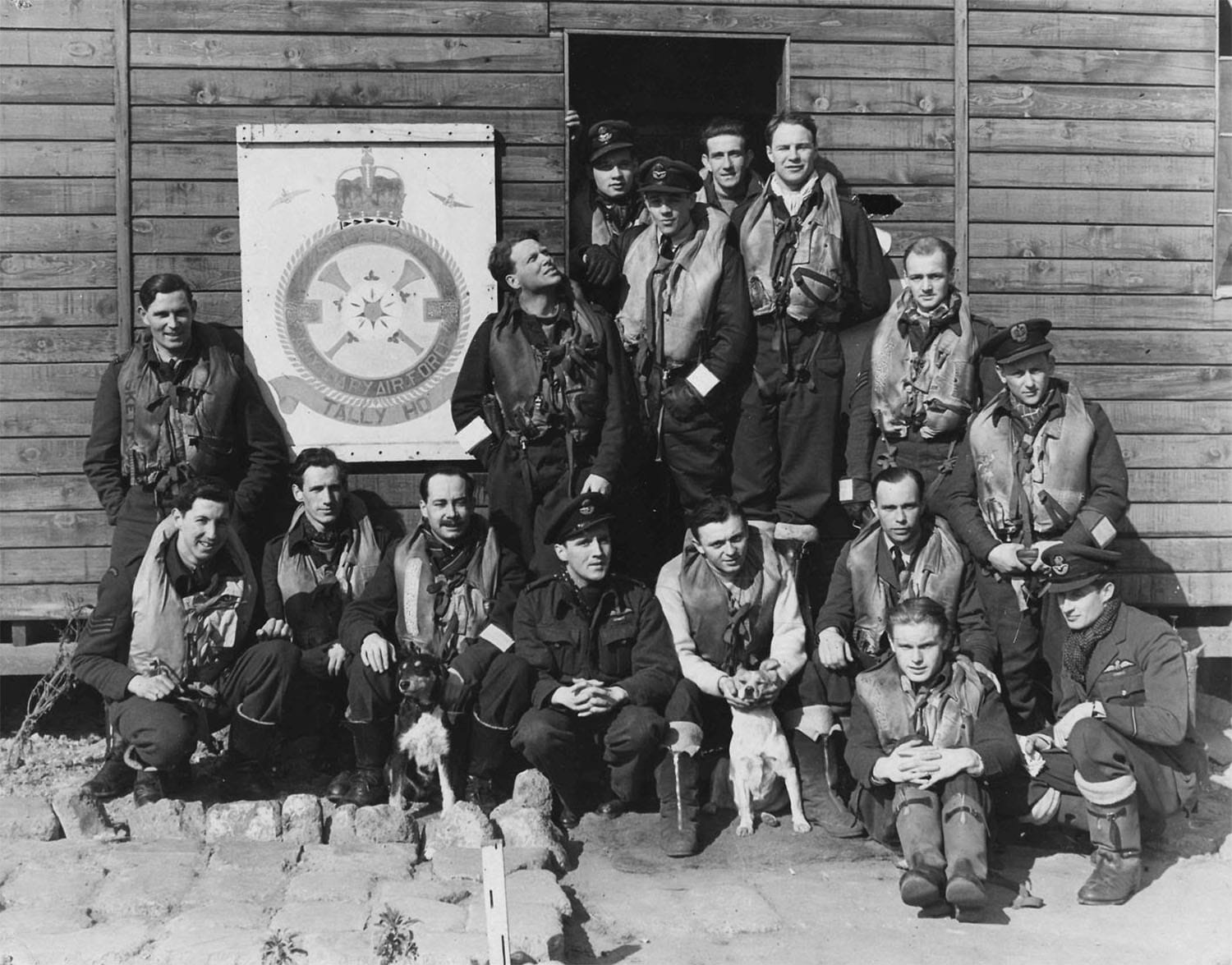
Integrated into Fighter Command following the start of hostilities, 609 saw little action during the first few months of the war, being stationed in the north at Drem and Catterick, however, with the threat of German action in the west looming, 609 was transferred to southern England and was stationed at Northolt, west of London. From here the Sqn saw extensive action over the Channel and especially over Dunkirk during the frantic withdrawal of the BEF from France during late May and early June 1940, during which several pilots and aircraft were lost.
The Sqn was somewhat dejected following their mauling at the hands of the Luftwaffe over Dunkirk; however, things were soon turned around with the arrival of a new Commanding Officer, Sqn Ldr George Darley, and the move to Middle Wallop near Salisbury in July 1940. Darley was an experienced pilot and leader and introduced some changes of procedure, one of which was the discarding of Fighter Command’s Manual for Air Fighting, the rule book for air combat!
From that point on 609 fought as the Germans did, with a much looser and fluid battle formation, a world of difference to the rigid RAF formations, and it paid off. As the Battle of Britain grew in intensity throughout late July and into August of 1940, 609’s ‘score’ steadily rose and its reputation spread. 609 was the first Spitfire unit to achieve 100 enemy aircraft destroyed, 14 of which occurred in one single engagement on 13 August over the Isle of Wight. By November 1940 however, the original core of West Riding Auxiliary pilots had been lost, the last one being Flight Lieutenant John Dundas, an ace with at least 12 victories, who was a foreign correspondent with the Yorkshire Post in Leeds. The arrival of new pilots had a cosmopolitan effect on the Squadron, a fact bemoaned by one of the staunch West Yorkshire groundcrew who was not amused –
“It’s bad enough having to deal with all these foreigners – Canadians, Aussies, a Kiwi, Frenchies, some Belgians and a Yank, but now we have to put up with two Lancastrians!”
Following the victory in the Battle of Britain, RAF Fighter Command went on the offensive, carrying the fight across the Channel with daily raids and sweeps over occupied France to bring the Luftwaffe fighter force to battle. Attrition was high on both sides; however, this policy was essential in order to pin down German resources in the West to relieve the pressure on the Soviet Union.
New aircraft were coming into service, one of these being the Hawker Typhoon. The Typhoon was originally designed to be a high-altitude interceptor fighter to replace the Hurricane, however its performance was lacking and problems with the airframe and the Napier Sabre engine led the Air Ministry to believe it wasn’t going to be a success and the aircraft’s future was in great doubt. 609 had been re-equipped with the Typhoon in 1942, the only Auxiliary Squadron to fly the type, and the OC at that time, Sqn Ldr Roland Beamont, was instrumental in rectifying the problems and using the aircraft at lower level, initially to counter low flying Focke-Wulf 190s raiding the towns on the south coast and later on interdiction missions across the Channel. At lower altitudes the Typhoon was magnificent, with ample power giving an excellent turn of speed, solid handling, a robust construction and heavy armament.
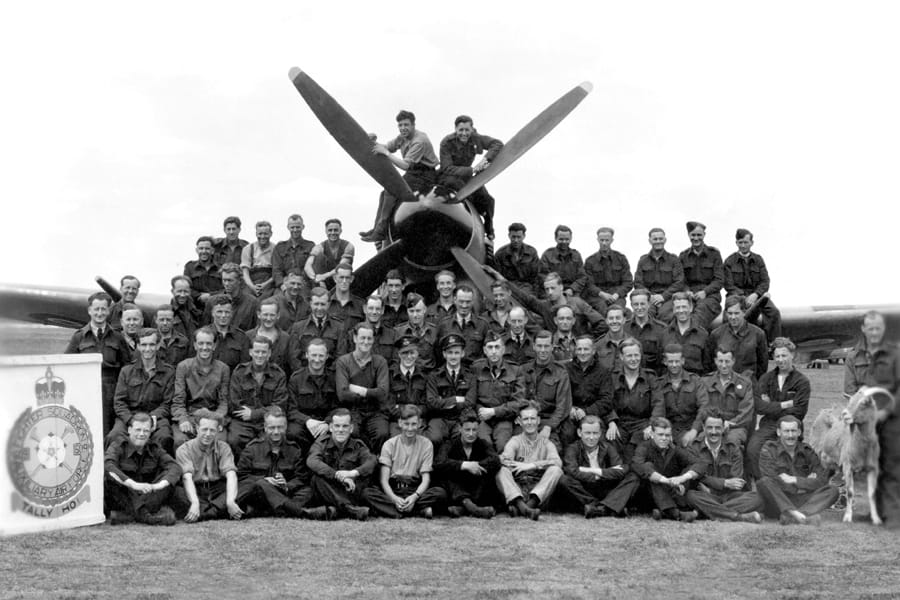
Using rockets, bombs and four 20mm-cannon it became the best Allied ground-attack and close air support aircraft of the war and was used by 609 until the end of hostilities in the Battle for Normandy following the D-Day Landings and throughout the course of the campaign in North-West Europe. 609 had great success flying this aircraft and was the first Typhoon unit to destroy 50 enemy aircraft and became the highest scoring Typhoon Sqn with a total of 227 enemy aircraft accounted for. 609 were also named by Air Vice Marshal Sir Trafford Leigh-Mallory as the best Typhoon Sqn in the Second Tactical Air Force. Following illustrious wartime service the Auxiliary Squadrons were disbanded in September 1945.
In the immediate post-war era the new threat became the Soviet Union and revisions of defence capability by the Royal Air Force prompted the reformation of the Auxiliary Air Force flying sqns in 1946. In 1947 King George VI bestowed the Royal title on the Auxiliary Air Force as recognition of wartime service. Therefore 609 returned to Yeadon, the pre-war home base, as part of the Royal Auxiliary Air Force (RAuxAF) and flew night fighter Mosquito and later marks of Spitfire during the following years.
The piston-engined aircraft were replaced by jet power in late 1950 and the Vampire plus two marks of Gloster Meteor was flown from a new base, RAF Church Fenton near Tadcaster; this move was necessary to take advantage of the longer runways and more extensive station infrastructure. Reservists continued to enjoy serving in a part-time capacity, but in 1957 a major Defence Review by the Government of the time disbanded all the RAuxAF flying squadrons at a stroke, it was no longer financially viable to operate reserve flying units, train part-time pilots to fly jet aircraft, or provide more modern aircraft for the reserve units. Britain was broke after the war and austerity was the order of the day throughout the 1950s, so, after 21 years distinguished service, 609 Squadron was disbanded and, as many thought, never to be seen again.
The late 1970s saw the emergence of several new Reserve Sqns as part of the reinvigoration of the RAuxAF and the provision of support to the regular force countering the threats of the Cold War. This continued though the 1980s and into the 1990s. In 1998 RAF Leeming formed the Air Defence Support Squadron (ADSS), a multi-traded reserve unit in the Air Defence Role to support the Tornado F3 Wing based there. In 1999 the ADSS became an Operational Support Squadron (OSS) and was granted the number plate 609, so the ‘White Rose Squadron’ was reborn after 42 years.
Since 1999, the current day 609 Sqn has served around the world with reservists undertaking a variety of tasks. The whole unit deployed to the Gulf for a 6-month period in early 2003 during the Iraq War with personnel serving in Kuwait, Oman, Jordan, Cyprus and Iraq itself. Those located at Ali-Al-Salem airbase in Kuwait were subjected to intense Iraqi bombardment with SCUD missiles, the first 609ers in action since the Second World War. Members of the Squadron also served alongside their regular colleagues in Afghanistan and were some of the last ones to leave Camp Bastion in October 2014. The Squadron’s role is ground-based Force Protection (FP) as part of the Royal Air Force Regiment with most reservists being ‘Gunners’ although a few other trades are included in the structure of the unit. The Squadron now has a highly specialised role within the FP function, that of counter drone (C-UAV) operations.
609 is the only RAF Regiment Reserve unit in the north of England and because of the geographical location recruits from a wide area such as North, West and South Yorkshire, the conurbations of Newcastle and Sunderland, and parts of Cumbria, Lancashire and Cheshire.
Although 609 is no longer a flying squadron today, personnel are mindful of their proud heritage, a fact which is commemorated by the two memorials inside Leeds-Bradford International Airport (LBIA), one to the left of the main entrance and the other upstairs in the departure area. The connection to Yeadon and LBIA is strong and is marked each year at the annual Remembrance ceremony.
TALLY-HO!
Join the 609 Squadron Association
Our Association can only exist with the support of its members. Please consider joining us, especially if you have served on, or have a connection to, 609(WR) Squadron. Contact the Committee for any further information. We are also pleased to help people who are researching the squadron's history and welcome all enquiries.